
Research collaboration · Grant partnerships
Join our cancer diagnostic research grant projects
OncoFirm™ Diagnostics is a research-stage company developing a fluorescent lateral flow platform for cancer biomarker detection. We are building grant teams with academic investigators, clinical sites, laboratories and technology companies. This site is where cancer diagnostic research collaboration with us starts.

A collaboration hub for cancer grants, built around specific project goals
Cancer outcomes depend heavily on the stage at which disease is found, yet most biomarker testing still runs through central laboratories. Our research asks a narrow, testable question: can a quantitative, reader-based lateral flow immunoassay measure selected cancer-associated protein biomarkers reliably enough to be studied closer to the point of care?
Answering it takes more than one organization. Assay chemistry, optical engineering, biostatistics, access to well-characterized specimens and clinical judgment all have to be in the same proposal. This site sets out the research aims we are pursuing, the cancer diagnostic research grants we are targeting and the roles open to partners. For company, product and investor information, visit our corporate site at oncofirm.com.
Grant project goals you can join
Each goal below maps to work packages in the proposals we are preparing. Partners can lead a package, contribute to one, or advise.
Assay feasibility
Show that fluorescent lateral flow immunoassays can measure selected cancer-associated protein biomarkers across a clinically relevant range.
Quantitative reader
Build and characterize a portable fluorescence reader with calibration, internal controls and traceable result records.
Analytical validation
Establish limit of detection, precision, interference, cross-reactivity and lot-to-lot reproducibility under a written protocol.
Clinical feasibility
Run IRB-approved specimen studies with clinical partners, comparing results against accepted reference methods.
Signal interpretation
Develop and independently validate software that interprets reader signals, with locked models and prespecified analysis plans.
Manufacturing and quality
Define materials, process controls and design and development documentation that later regulatory work will depend on.
Who we are looking for
Each proposal needs organizations and individuals who can take a defined role and carry it through the funded period:
- Academic investigators and research institutions as co-investigators or as the research-institution partner on technology-transfer grants
- Cancer centers, hospitals and biobanks with consented, well-annotated specimens and IRB experience
- Biostatisticians for study design, sample-size planning and analysis
- Assay, antibody and reagent developers with materials or methods relevant to protein biomarker detection
- Optics, hardware, software and machine-learning teams for reader and data work
- Regulatory, quality and manufacturing specialists
How clinical and academic research collaboration works explains what each role involves.

How joining a grant project works
The path from first contact to submission is the same whether you are a university lab or a company.
1. Send an inquiry
Tell us who you are, what you would contribute and which funding opportunity you have in mind, if any.
2. Scoping call
We compare your capabilities against open work packages and agree whether there is a fit worth pursuing.
3. Confidentiality and terms
A confidentiality agreement comes first. Background IP, publication rights and data ownership are agreed in writing before work starts.
4. Roles, budget and letters
We define your scope, budget and personnel, and exchange letters of support or subaward documents as the funder requires.
5. Submit together
The proposal goes in with every partner named. If it is funded, the work runs to the milestones in the award.
6. Report and publish
Results are reported to the funder, and publication follows the terms agreed at the outset.
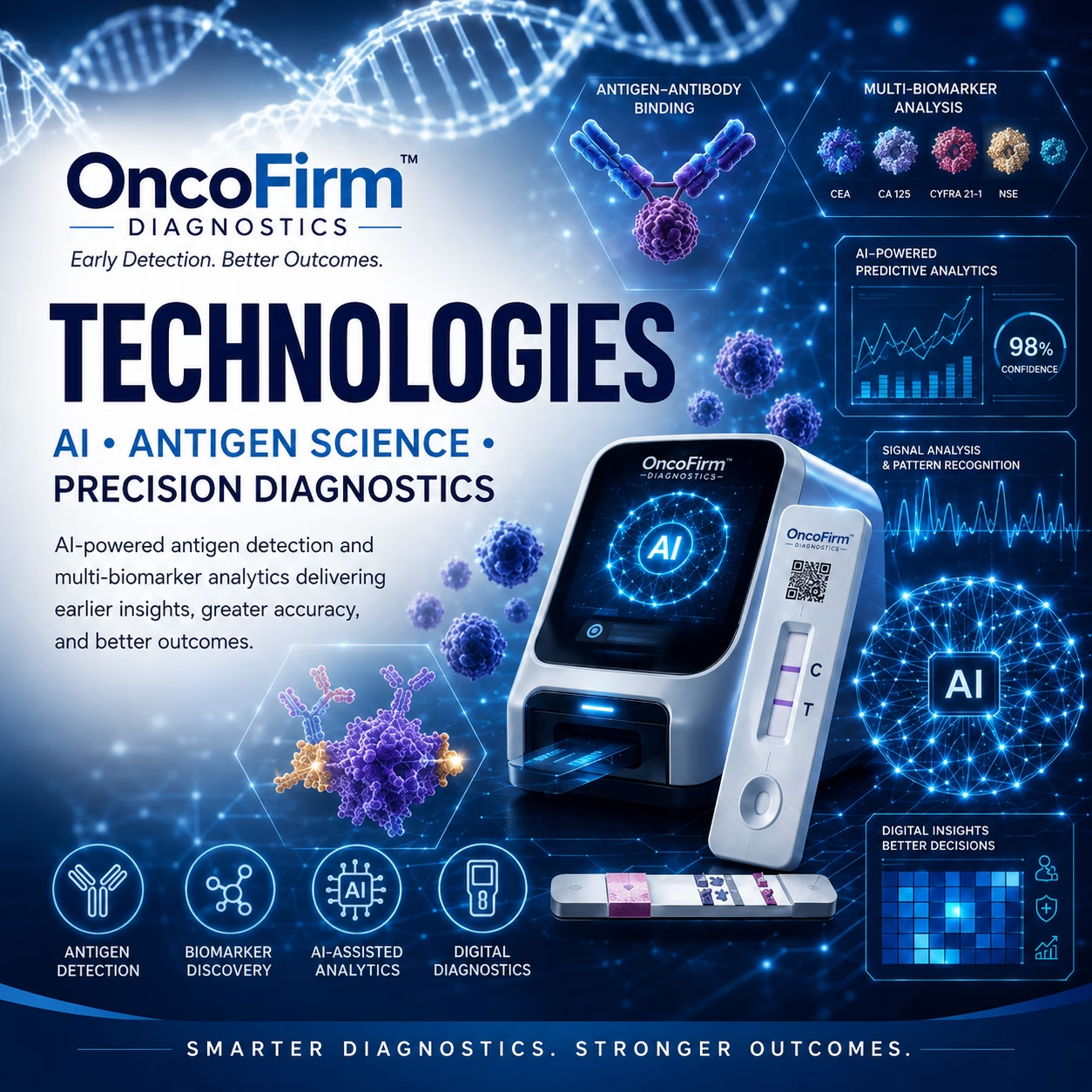
The research platform behind the projects
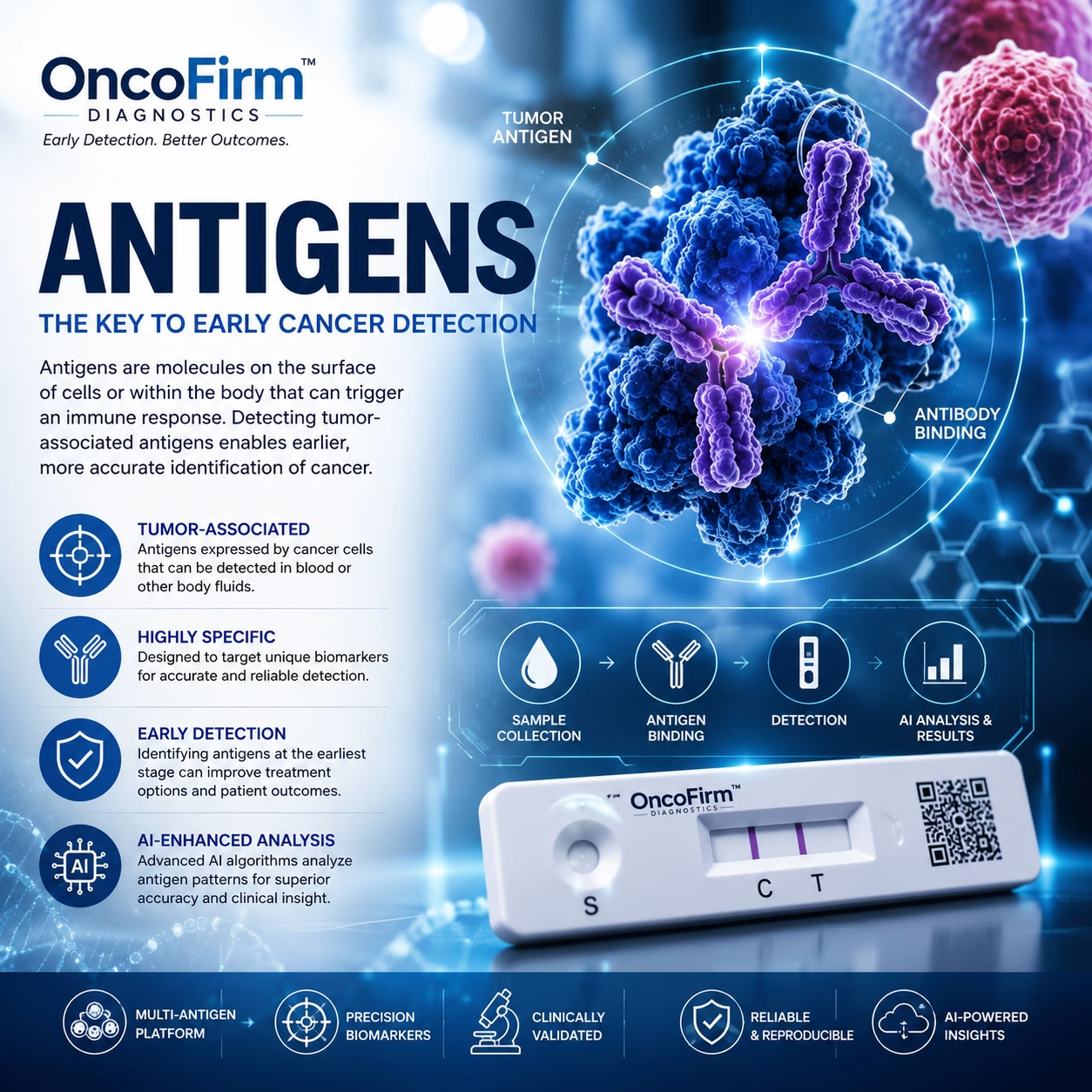
The platform has four parts that are being developed together: antigen and antibody research for cancer-associated proteins, a fluorescent lateral flow immunoassay format, a portable digital fluorescence reader and software for AI-assisted signal interpretation.
Treating these as one system matters for research design. The intent is for calibration data, lot information and quality-control results to travel with each test record, so that analytical studies can trace a result back to the materials and conditions that produced it.
Where the work stands today
- OncoFirm is at the research and development stage. Assay, reader and software work is in feasibility and prototype development.
- The company has filed six patent applications and three trademark applications relating to the platform, announced in August 2026. These are pending applications; none has been granted or registered.
- No analytical or clinical performance has been established, and no OncoFirm product has been cleared or approved by the FDA.
- We are seeking non-dilutive funding. Awards will be listed on the research and funding page as they are made.
Funding sources in scope
We are pursuing peer-reviewed programs that fund early technology development and translational research in cancer diagnostics:
- NIH and National Cancer Institute small business programs (SBIR and STTR)
- NCI technology-development programs for innovative molecular and analytical methods
- Private cancer research foundations and philanthropic programs
- State and regional innovation funding
- Academic-industry consortium grants led by a partner institution
If you manage or know of a program that fits, tell us about the grant opportunity.
Frequently asked questions
Who can collaborate with OncoFirm on a grant project?
Universities, academic medical centers, cancer centers, hospitals, biobanks, contract research organizations, diagnostics and reagent companies, engineering and software teams, and independent consultants. What matters is a defined contribution to a specific aim.
Do I need to bring funding?
No. We expect most collaborations to start from a shared proposal to a funder. If you already hold an award or are responding to a specific funding opportunity, tell us and we will look at how OncoFirm could take part.
Does OncoFirm have an FDA-cleared test?
No. The technology is in research and development. Performance characteristics have not been established and nothing on this site is available for clinical use.
How is intellectual property handled?
It is agreed in writing before work begins. Each party keeps its background IP. Ownership and licensing of project results are set out in the collaboration or subaward agreement, consistent with funder rules and each institution’s policies.
What does OncoFirm contribute to a proposal?
The platform concept and assay architecture, reader and software development work, the related patent filings, project leadership, and the plan for taking results toward regulatory and manufacturing readiness.
Can institutions outside the United States take part?
It depends on the funder. Under NIH small business awards, research must generally be performed in the United States, and foreign participation needs specific justification and approval. Foundation and other programs vary, so tell us where you are based.
Bring your expertise to a funded research plan
Tell us what you would contribute and which project goal it relates to.
Research and regulatory status
OncoFirm™ technologies described on this site are in research and development. Their performance characteristics have not been established, and no OncoFirm product has been cleared, approved or authorized by the U.S. Food and Drug Administration. Nothing here is medical advice. Reference to a federal agency or funding program does not imply endorsement, funding, sponsorship or affiliation.
Device images on this site are concept renderings that illustrate intended functionality.