
Research and funding overview
Advancing cancer grant research, one defined milestone at a time
This page is the overview of OncoFirm’s grant-directed research program: what we are trying to show, which funding programs fit, what each stage of funding would pay for and where partners come in.
What the research program is trying to show
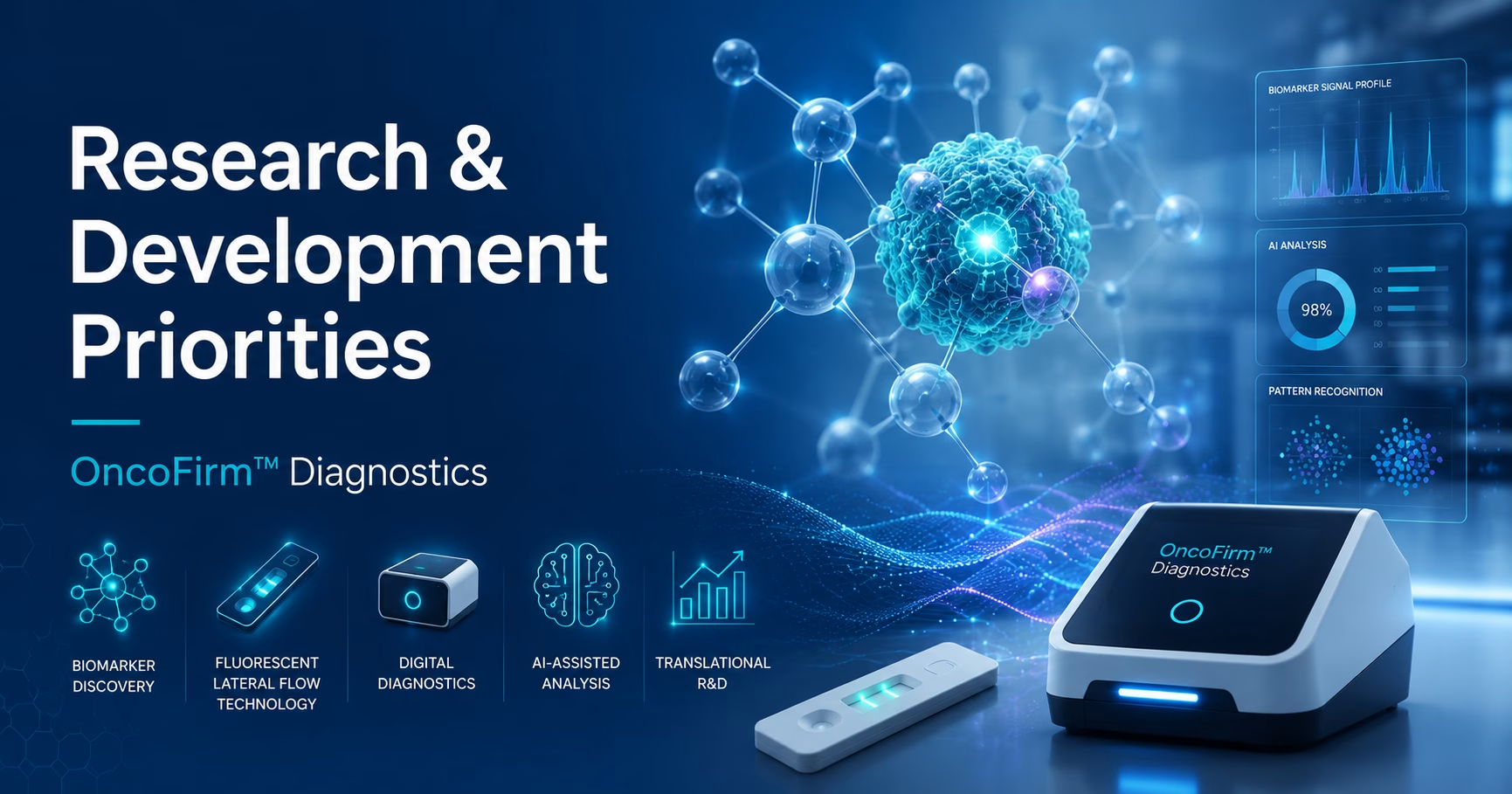
Lateral flow tests are fast and simple, but conventional visually read strips are mostly qualitative. Many cancer-associated protein biomarkers are informative only when measured as a quantity and interpreted against a threshold or a trend. Our program investigates whether fluorescent labels, a calibrated reader and controlled manufacturing can make a lateral flow format quantitative enough to study for that purpose.
The work is organized as a staged translational pathway. Each stage ends in evidence a reviewer can evaluate, and each is written so a partner can own part of it. The detail is on the research and development priorities page.
The staged pathway that funding supports
Early-stage grants typically fund the first two or three stages. Later stages depend on what the earlier evidence shows.
1. Technical feasibility
Antibody pair selection, reporter chemistry and strip architecture for selected biomarkers, with go/no-go criteria.
2. Prototype development
A working assay cassette and reader prototype that produce repeatable signals under controlled conditions.
3. Analytical validation
Limit of detection, precision, linearity, interference, cross-reactivity, stability and lot-to-lot studies.
4. Clinical feasibility
Retrospective and prospective specimen studies under IRB oversight, against accepted reference methods.
5. Regulatory preparation
Intended-use definition, design and development controls, risk management and early engagement with regulators.
6. Manufacturing scale-up
Process development, quality systems and supplier qualification needed for consistent production.
Funding routes and how each one involves partners
Federal small business grants
NIH and NCI SBIR and STTR awards fund feasibility and development at small companies. Technology-transfer awards are built around a formal partnership with a U.S. research institution.
Technology-development programs
Programs that support new analytical and molecular methods for cancer research can fund early, higher-risk assay and instrument work.
Foundation and philanthropic grants
Cancer research foundations fund focused projects, often on a specific cancer type or on access to diagnostics.
Partner-led academic grants
An academic or clinical investigator leads the application and OncoFirm joins as industry collaborator, subrecipient or technology provider.
What we have, and what we still need
In place: a defined platform concept, patent and trademark applications relating to it, and a development plan with staged milestones.
Needed from partners: access to characterized clinical specimens, biostatistical leadership, complementary assay materials and methods, specialist laboratory capability, and investigators with a track record in cancer biomarker research. The equipment and facility side is set out in our laboratory resources and equipment plan, and the clinical side in the clinical development plan.
Frequently asked questions
Which funding stage is the program ready for?
Feasibility and early development. That corresponds to Phase I small business awards and to exploratory technology-development mechanisms.
Can a partner institution be the lead applicant?
Yes. For many academic and foundation programs it makes more sense for the institution to lead, with OncoFirm as collaborator or subrecipient.
How do I suggest a funding opportunity?
Use the grant opportunity form. Give the program name, funder, deadline and the role you think OncoFirm could play.
Have a funding opportunity or a capability that fits?
Send the outline. We will come back with a view on fit, timing and what a joint proposal would need.
Research and regulatory status
OncoFirm™ technologies described on this site are in research and development. Their performance characteristics have not been established, and no OncoFirm product has been cleared, approved or authorized by the U.S. Food and Drug Administration. Nothing here is medical advice. Reference to a federal agency or funding program does not imply endorsement, funding, sponsorship or affiliation.