Why early cancer detection matters, and where its limits lie
By OncoFirm Diagnostics · Last updated October 2026
Early cancer detection matters because, for most solid tumors, treatment is more likely to be curative while the disease is still localized. It matters most where the health system can act on the finding, which is why the evidence that counts is fewer deaths, not simply more cancers found.
The scale is not in dispute: an estimated 20 million new cancer cases and 9.7 million cancer deaths worldwide in 2022 (Bray et al., 2024). What has to be shown, test by test, is that finding a given cancer sooner changes what happens to the patient.
Early diagnosis and screening are different tasks
The World Health Organization separates two activities that are often blurred together. Early diagnosis means recognizing cancer promptly in people who already have symptoms; screening means testing people who feel well (World Health Organization, 2017).
The difference shapes what a test must do. Among symptomatic patients the proportion with cancer is higher, so a positive result is more likely to be true. In a screening population the same test, with the same sensitivity and specificity, yields a much larger share of false positives.
The clinical rationale
Disease confined to its organ of origin can often be treated with curative intent by surgery or radiotherapy; metastatic disease usually cannot. Stage at diagnosis is therefore one of the strongest predictors of outcome, and a large share of cancers are still found late (Crosby et al., 2022).
Organized screening for cervical, colorectal and breast cancer, and low-dose CT for people at high risk of lung cancer, is recommended in many countries on evidence that it lowers deaths from those cancers. Cervical and colorectal screening go further than early detection, because they find precancerous lesions that can be removed.
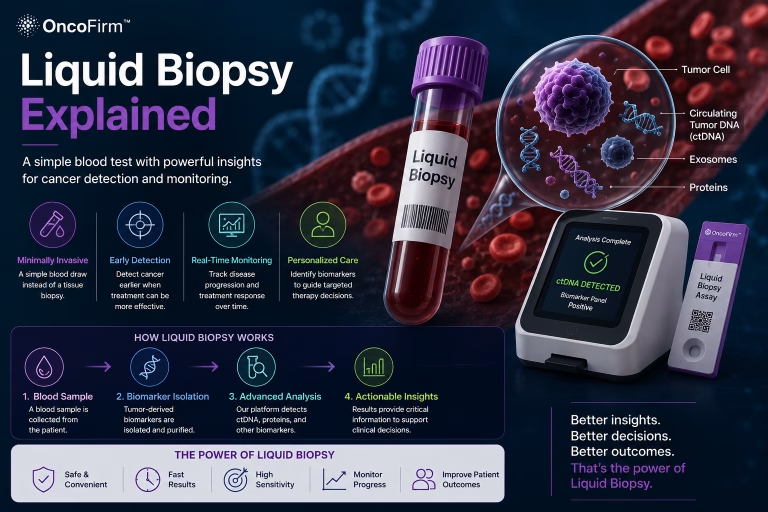
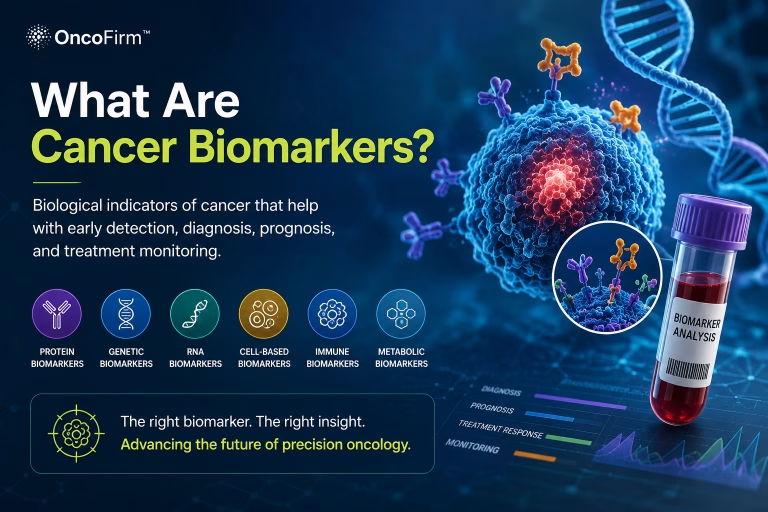
New candidates come mainly from cancer biomarkers measured in blood, including the circulating DNA methods described in liquid biopsy explained. They inherit every limit below.
Three biases that flatter early detection
Survival measured from the date of diagnosis can improve without anyone living longer. Three effects, set out in the National Cancer Institute’s screening overview for health professionals, explain why.
Lead-time bias
Diagnosing a cancer earlier starts the survival clock sooner. Measured survival lengthens even if the date of death does not move.
Length bias
Slow-growing tumors spend longer in a detectable, symptom-free state, so screening finds them preferentially. Screen-detected cases look better partly because they were less aggressive to begin with.
Overdiagnosis
Some detected cancers would never have caused symptoms or death in that person’s lifetime. Treating them brings harm without benefit, and such cases cannot be identified individually.
False positives and the workup that follows
False positives are a matter of arithmetic. When few of the people tested have cancer, even a highly specific test can return more false positives than true positives, and each one leads to imaging, sometimes biopsy, cost and anxiety. Prospective studies of blood-based multi-cancer tests have measured the diagnostic workup that follows a positive signal as well as the cancers found (Lennon et al., 2020; Schrag et al., 2023). A false negative has a cost too: reassurance that may delay a visit when symptoms appear.
What a credible early-detection claim needs
Because survival figures mislead, screening tests are judged on cancer-specific mortality in randomized trials. How to design such trials for multi-cancer blood tests is under active discussion (Minasian et al., 2023). Our research framework summary covers how these issues apply to multi-biomarker blood tests for screening and triage.
- A stated intended use and population, fixed before the data are analyzed.
- Specimens collected prospectively from that population, including benign conditions that mimic the cancer, not only healthy volunteers.
- Sensitivity reported by stage, since detecting advanced disease says little about early disease.
- Independent validation with locked cutoffs or algorithms.
- Evidence that acting on the result improves outcomes, and a diagnostic pathway able to resolve positives.
The last point is a health-system question as much as a laboratory one. Detection helps only where timely diagnosis and treatment are available (World Health Organization, 2017).
Where study-design partners fit
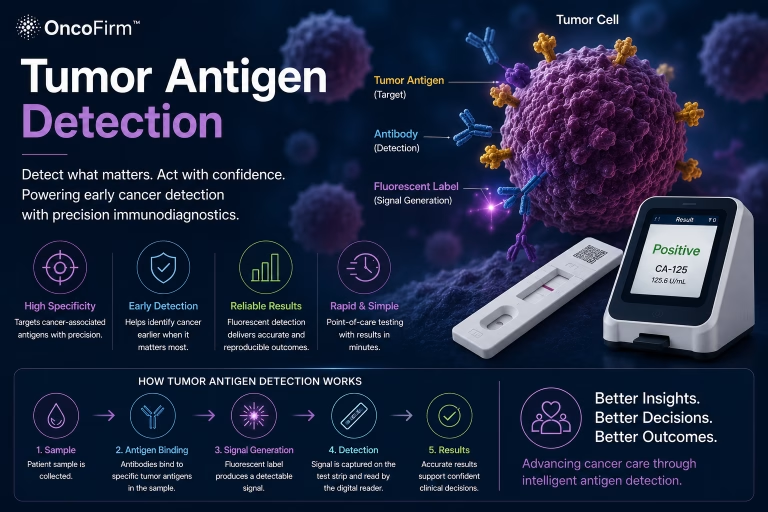
OncoFirm is a research-and-development-stage company developing a fluorescent lateral flow immunoassay platform for cancer-associated protein biomarkers. No analytical or clinical performance has been established, and the choice of intended use, for example triage of symptomatic patients versus screening, is itself a research question.
Answering it takes clinician-researchers, biostatisticians and groups holding prospectively collected, staged specimens. The clinical collaborations page describes how such partners can take part, and the form to discuss a grant opportunity is the place to propose a study.
Frequently asked questions
Does finding cancer earlier always improve survival?
No. Earlier diagnosis lengthens measured survival even when it does not delay death, which is lead-time bias, and some screen-detected cancers would never have caused harm. Benefit has to be shown as lower mortality in a controlled trial.
What is overdiagnosis in cancer screening?
Overdiagnosis is the detection of a cancer that would not have caused symptoms or death during the person’s lifetime. It differs from a false positive because the cancer is real, but treating it offers no benefit.
What is the difference between screening and early diagnosis?
Screening tests people without symptoms; early diagnosis means promptly investigating people who have symptoms. The two place different demands on a test because the proportion of people with cancer differs.
Can a blood test screen for many cancers at once?
Multi-cancer blood tests are being evaluated in prospective studies. Whether they reduce cancer deaths is the question randomized trials are designed to answer, and a positive result still requires confirmatory imaging and pathology.
Related research and resources
- What are cancer biomarkers? — classes of marker and the validity standards they must meet
- Liquid biopsy explained — why circulating tumor DNA is hard to detect in early-stage disease
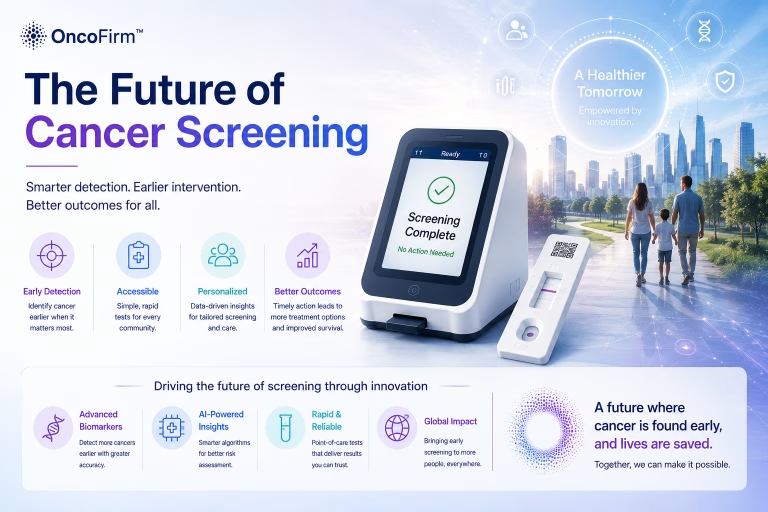
- The future of cancer screening — how screening research is developing
- Clinical development pathway — the stages an investigational cancer diagnostic must pass through
References and further reading
- Bray F, Laversanne M, Sung H, et al. Global cancer statistics 2022: GLOBOCAN estimates of incidence and mortality worldwide for 36 cancers in 185 countries. CA Cancer J Clin. 2024;74(3):229–263.
- Crosby D, Bhatia S, Brindle KM, et al. Early detection of cancer. Science. 2022;375(6586):eaay9040.
- World Health Organization. Guide to cancer early diagnosis. Geneva: WHO; 2017.
- National Cancer Institute. Cancer Screening Overview (PDQ) — Health Professional Version.
- Minasian LM, Pinsky P, Katki HA, et al. Study design considerations for trials to evaluate multicancer early detection assays for clinical utility. J Natl Cancer Inst. 2023;115(3):250–257.
- Lennon AM, Buchanan AH, Kinde I, et al. Feasibility of blood testing combined with PET-CT to screen for cancer and guide intervention. Science. 2020;369(6499):eabb9601.
- Schrag D, Beer TM, McDonnell CH, et al. Blood-based tests for multicancer early detection (PATHFINDER): a prospective cohort study. Lancet. 2023;402(10409):1251–1260.
Research and regulatory status
OncoFirm™ technologies described on this site are in research and development. Their performance characteristics have not been established, and no OncoFirm product has been cleared, approved or authorized by the U.S. Food and Drug Administration. Nothing here is medical advice. Reference to a federal agency or funding program does not imply endorsement, funding, sponsorship or affiliation.